Kinn is a former municipality in the Sunnfjord district of Sogn og Fjordane county, Norway. The parish of Kinn has existed for centuries and in 1838, the large parish was established as a municipality that existed from then until 1964. The municipality was centered around the island of Kinn where the main Kinn Church is located. The municipality encompassed most of the southern part of the present-day municipality of Kinn (same name, different borders) as well as parts of Askvoll (in the south) and the southwestern part of Bremanger (in the north). Upon its dissolution in 1964, it covered 159 square kilometres (61 sq mi).
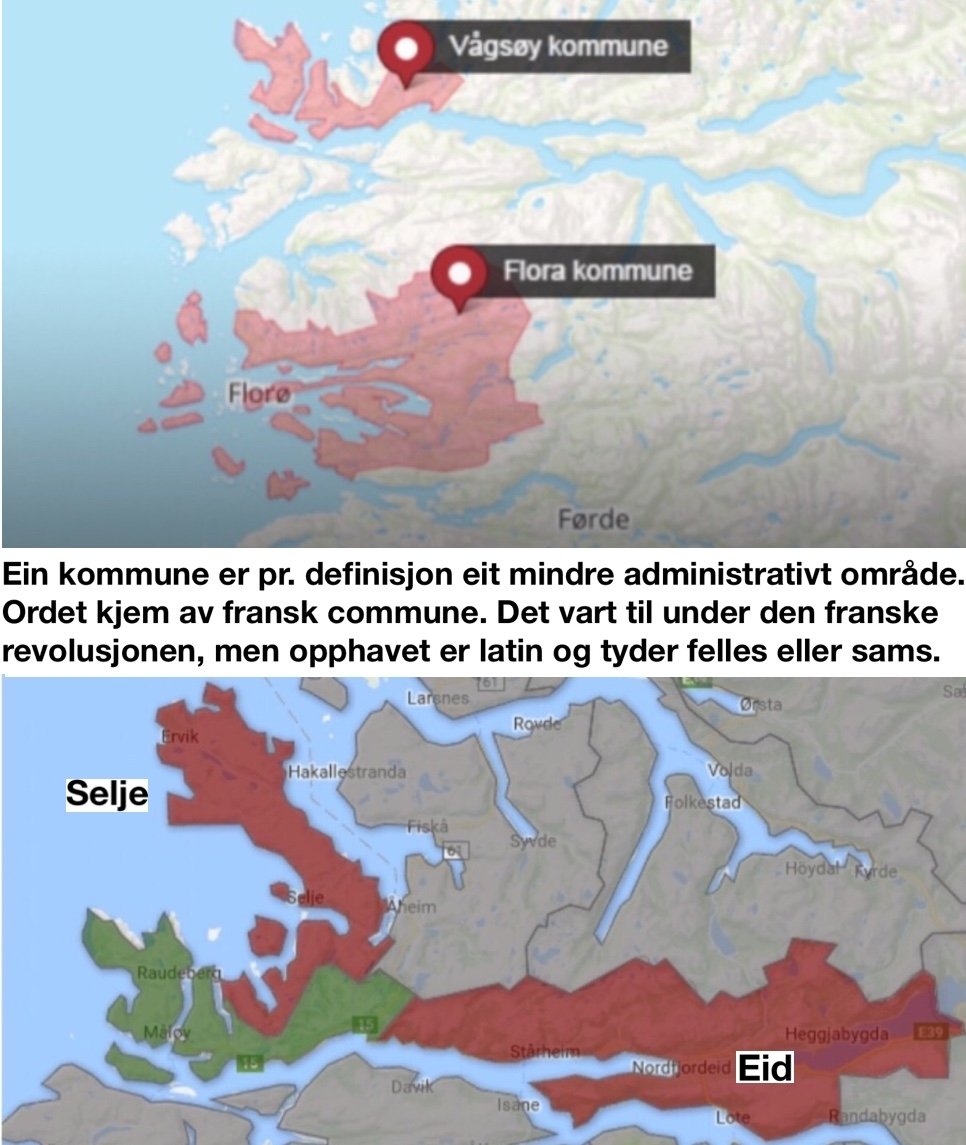
On 1 January 2020, the old Kinn name was brought back into use when the municipalities of Flora, Norway and Vågsøy merged, creating a new Kinn Municipality.
History
The parish of Kinn was established as a municipality on 1 January 1838 (see formannskapsdistrikt law). On 3 January 1861, the village of Florø (population: 846) was established as a ladested (port town) and it was therefore separated from the municipality of Kinn to become a municipality of its own. This left 6,531 residents in Kinn. Then on 1 January 1866, the northern district of Kinn on the islands of Bremangerlandet and Frøya and the mainland area surrounding the Gulen Fjord (population: 1,852) was separated from Kinn to form the separate municipality of Bremanger. After the split, Kinn was left with 4,679 inhabitants.
On 1 January 1923, Kinn was split into three separate municipalities:
- Kinn, which included the western islands and the mainland areas surrounding Florø, but not including the port town (population: 2,508)
- Bru, which included the southern islands of Svanøy and Askrova, a small area south of the Førdefjorden, the area around the village of Stavang, and the large valley east of the village of Norddalsfjord (population: 1,560)
- Eikefjord, which included the eastern district around the eastern end of the Eikefjorden (population: 929)
During the 1960s, there were many municipal mergers across Norway due to the work of the Schei Committee. On 1 January 1964, a merger took place which reunited most of the old municipality of Kinn. Before the merger Kinn had a population of 3,567. The new municipality was called Flora, and it included:
- the ladested of Florø (population: 2,040)
- the municipalities of Kinn (population: 3,567) and Eikefjord (population: 919)
- the parts of Bru municipality that were north of the Førdefjorden (population: 1,155)
- the villages of Husefest and Breivik in Bremanger municipality (population: 9)
- the Steindal valley area in Vevring municipality (population: 25)
Name
The municipality (originally the parish) is named after the old Kinn farm (Old Norse: Kinn) on the island of Kinn since the first Kinn Church was built there. The name is identical to the word kinn which means "cheek", referring to the steep slope of a mountain on the island. Historically, the island's name was spelled Kind.
Government
During its existence, this municipality was governed by a municipal council of directly elected representatives. The mayor was indirectly elected by a vote of the municipal council.
Municipal council
The municipal council (Heradsstyre) of Kinn was made up of 21 representatives that were elected to four year terms. The party breakdown of the final municipal council was as follows:
Mayors
The mayors (Nynorsk: ordførar) of Kinn:
Notable people
- Hans Jensen Blom, the vicar of Kinn Church and member of the Parliament of Norway
- Mathias Sigwardt Greve, a physician who briefly worked in Kinn
- Ivar Lykke Falch Lind, the former mayor and bailiff of Kinn
- Michael Sars, the vicar of Kinn Church from 1831 to 1838
- Georg Ossian Sars, a marine biologist who discovered that cod fish eggs are pelagic
See also
- List of former municipalities of Norway
References